
Reading Your Own Incident Data
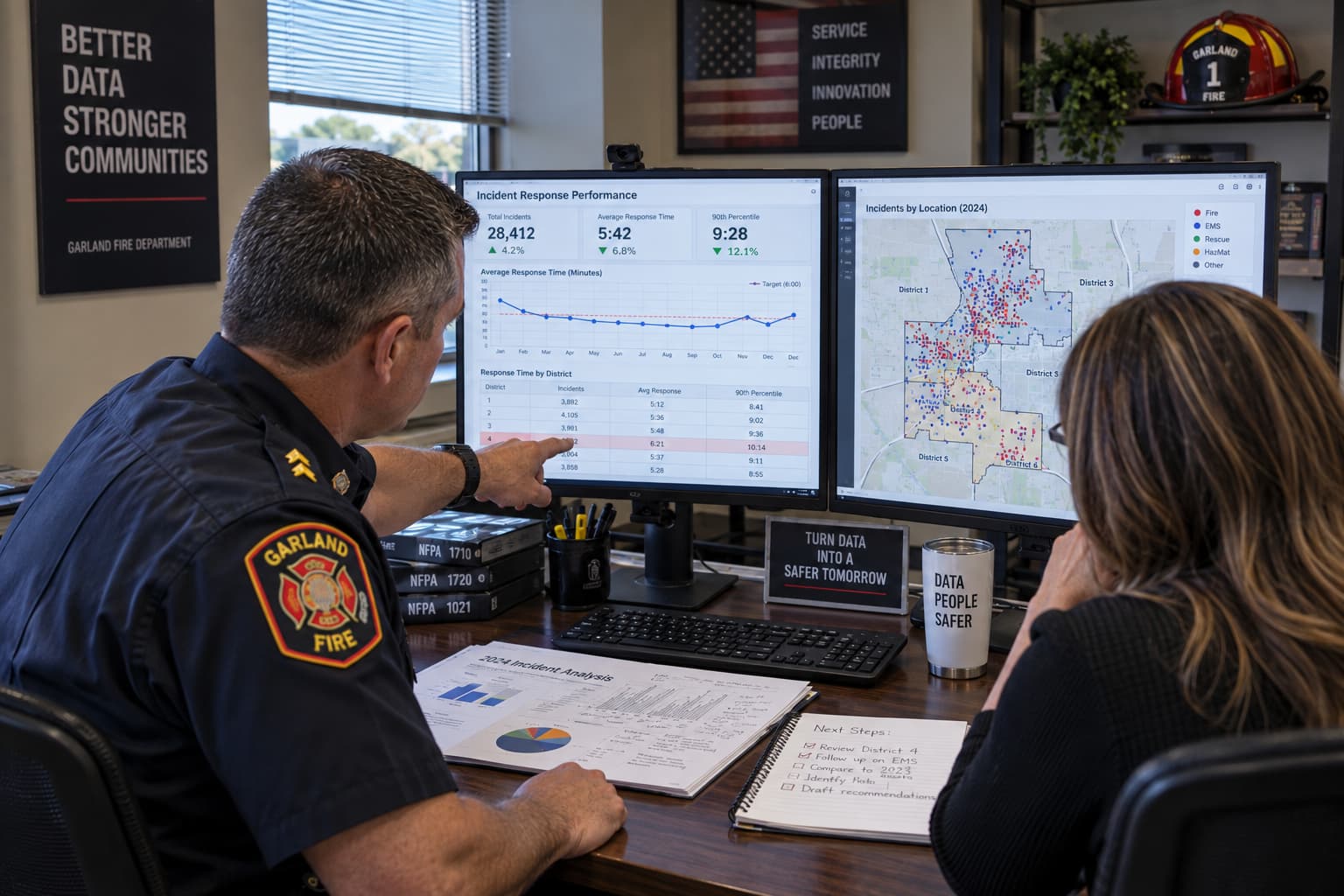
Learn how to read response-time distributions, workload, unit utilisation, concurrency, incident types and other operational measures without being misled by a single average.
Read
Data literacy · Analytics · Artificial intelligence
Fire and EMS agencies collect enormous amounts of information through CAD, RMS, NERIS, ePCR, NEMSIS, GIS, staffing systems, fleet systems, communications platforms and connected equipment. Collecting data is not the same thing as understanding it. This track focuses on how leaders can use operational data to ask better questions, recognise misleading analysis, build useful dashboards, connect information across systems, and evaluate where artificial intelligence can actually provide value. Start with the data: artificial intelligence cannot fix inconsistent definitions, missing information, inaccurate timestamps, disconnected systems or a poorly defined problem. In many cases it will simply make bad data look more convincing.
Learn how to read response-time distributions, workload, unit utilisation, concurrency, incident types and other operational measures without being misled by a single average.
More data does not automatically create better information. Missing values, inconsistent definitions, inaccurate timestamps, duplicate records, workflow differences and changes in documentation can distort the conclusions leaders draw.
A dashboard should help someone make a decision. Start with the question and the audience rather than filling a screen with every field available in the database.
CAD, RMS, NERIS, ePCR, NEMSIS, GIS, staffing, hospital, fleet and other systems each contain part of the operational picture. Learn why connecting them is valuable and why integration is often harder than it sounds.
Understand the difference between describing what happened, explaining patterns, forecasting what might happen next, and using a model to recommend action.
Artificial intelligence is useful for some tasks and unreliable for others. Learn where current tools can save time, identify patterns, summarise information and assist people — and where confident output should not be trusted.
Establish the rules before widespread adoption. Define acceptable uses, sensitive information, human responsibility, records requirements, procurement expectations, and what must happen when AI is wrong.
Pieces with a reading list point at the clearest outside treatment of the subject we could find and verify. If something here is wrong, missing, or in the wrong order for how a department actually works, that is worth knowing now.
Send a note