Learning Lab
Learn the technology. Lead the adoption.
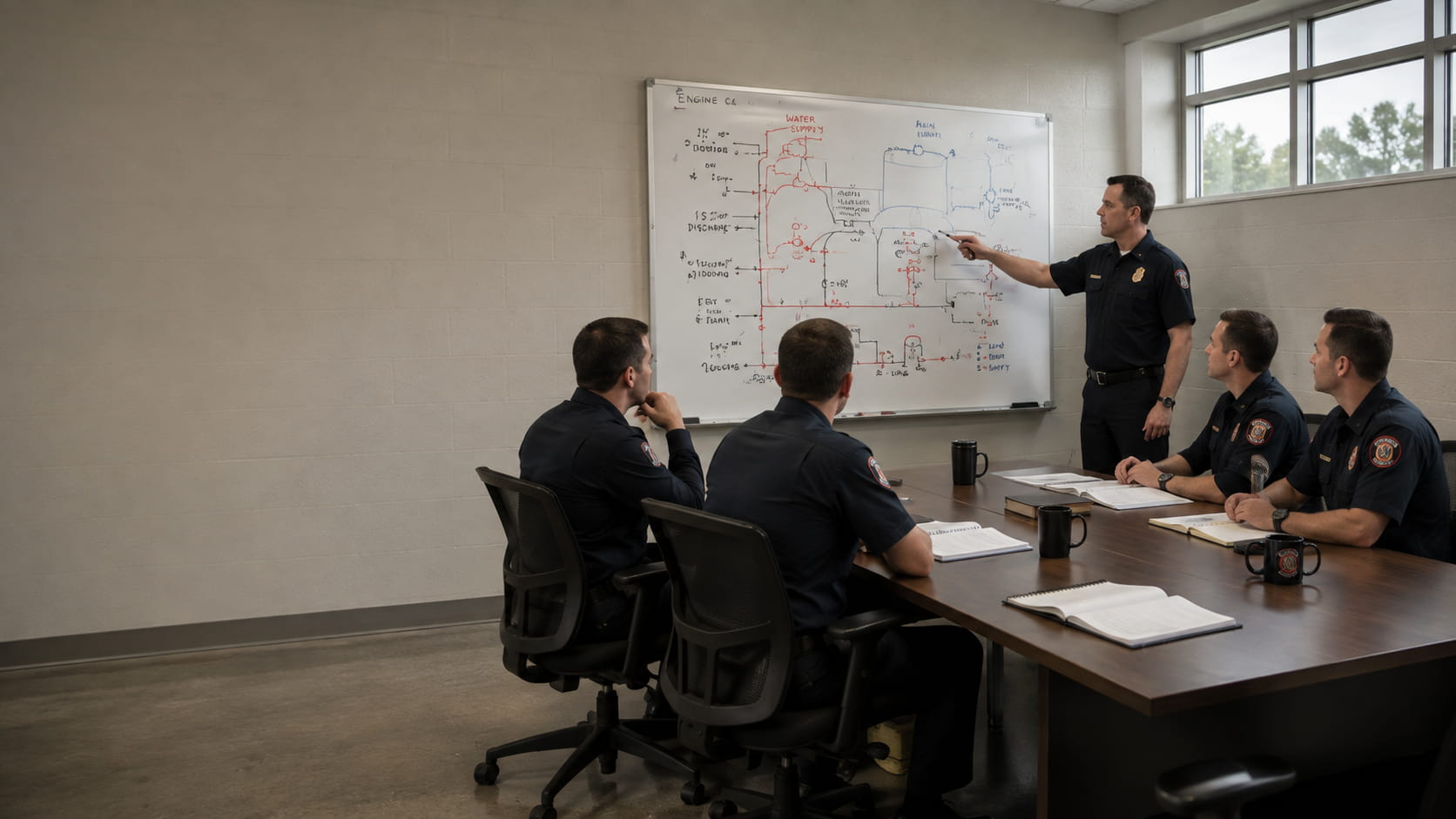
Technology should solve an operational problem, not create a new one. The Learning Lab gives fire and emergency services leaders a practical path from understanding the systems they already have to assessing needs, evaluating options, implementing change, and measuring results. Start with Fire Tech 101 if you need the foundation, or move directly into the Technology Adoption Roadmap if you already know the basics.
Explore the Learning Lab
Use the roadmap when you are working through a technology decision, or go directly to a topic when you need to understand a specific system, risk, or capability.
Foundational technology education
Fire Tech 101
The systems behind modern fire and EMS operations, explained in plain English. Start here to understand what CAD, RMS, NERIS, NEMSIS, LMR, FirstNet, GIS, AVL, APIs, cloud software, and integrations actually do — and how they fit together. You do not need to know how to build these systems. You need to know enough to ask good questions when someone wants to sell you one, replace one, integrate one, or tell you that two systems cannot talk to each other.
- What CAD Actually Does — and What It Doesn't
- Radio, FirstNet, and Broadband: What Is Different?
- Records Management and the Move to NERIS
- ePCR, NEMSIS, and the EMS Data Chain
- GIS, AVL, and Location Data: Where Is Everything?
- API, Interface, Integration: What Vendors Mean
- Cloud, SaaS, and Data Ownership
- UAS Basics for Public Safety
Fire Tech 101 · From Problem to Purchase
Technology Adoption Roadmap
Technology adoption should be a process, not a purchase. This roadmap follows a fire department technology decision from the first recognition of an operational problem through needs assessment, requirements, market research, evaluation, implementation, adoption and measurement. It is the framework behind our Fire Tech 101: From Problem to Purchase series — the LinkedIn post starts the conversation and the guide here carries the questions, sources and tools. Follow it from beginning to end, or jump straight to the stage your department is working through.
- Step 1 · Start With the Problem
- Step 2 · Run a Technology Needs Assessment
- Step 3 · Turn Needs Into Requirements
- Step 4 · Market Research and Build vs. Buy
- Step 5 · Run the Demo
- Step 6 · Pilot the Solution
- Step 7 · Evaluate Total Cost of Ownership
- Step 8 · Plan the Implementation
- Step 9 · Adoption and Change Management
- Step 10 · Data, Integrations, and Cybersecurity
- Step 11 · Measure the Results
- Step 12 · Lessons Learned and the Technology Roadmap
- Related guide · Procurement Without Getting Locked In
- Related guide · Making the Case: ROI a Council Will Accept
- Related guide · Map the Systems You Already Have
Cybersecurity is operational readiness
Cybersecurity for Fire & EMS Leaders
Cybersecurity is operational readiness. A department that cannot dispatch, alert its stations, write a patient care report or reach its records is out of service, whatever the cause. This track is written for chiefs and officers rather than for IT staff: what systems you actually depend on, who can get into them, what your vendors can reach, whether your backups restore, how you keep running without the system, and what you do in the first hours when something goes down.
Data literacy · Analytics · Artificial intelligence
Data and AI
Fire and EMS agencies collect enormous amounts of information through CAD, RMS, NERIS, ePCR, NEMSIS, GIS, staffing systems, fleet systems, communications platforms and connected equipment. Collecting data is not the same thing as understanding it. This track focuses on how leaders can use operational data to ask better questions, recognise misleading analysis, build useful dashboards, connect information across systems, and evaluate where artificial intelligence can actually provide value. Start with the data: artificial intelligence cannot fix inconsistent definitions, missing information, inaccurate timestamps, disconnected systems or a poorly defined problem. In many cases it will simply make bad data look more convincing.
Build · Automate · Connect
Build It Yourself
AI-assisted development and low-code tools have changed what a technically curious fire or EMS professional can build without a traditional software team. That creates real opportunity for administrative tools, dashboards, prototypes and automation. It also creates risk when internally developed software begins touching sensitive data, operational decisions or mission-critical systems. The question this track keeps returning to is not just whether you can build it. It is whether you should build it, who will maintain it, and what happens when the person who built it leaves.
How we choose sources
The Learning Lab is built to help fire and emergency services leaders separate evidence from marketing. We prefer primary government sources, standards, peer-reviewed research, and nonprofit or professional organizations whenever they are available. Trade publications and reputable news organizations are used to show how technology is being applied in the real world. Vendor-produced material may occasionally provide useful technical information, but it will always be identified as vendor-produced.
Our source preference
- Government agencies and standards organizations
- Peer-reviewed research and universities
- Nonprofit and professional public-safety organizations
- Fire, EMS, technology, and public-safety trade journalism
- Reputable general news organizations
- Vendor-produced technical resources, clearly labeled
Nothing in the Learning Lab is paid placement. Advertising or sponsorship does not determine which technologies, companies, research, or resources are recommended.
Everything we link out to is labeled with who published it — including when it comes from a company that sells in the space. Nothing here is paid placement.
PremiumWorkshopPremium content is optional paid Public Safety Technology Hub educational content, tools, workshops or other Hub-produced resources. Premium status does not affect directory inclusion, vendor placement, research selection or editorial conclusions.
Tell us what you need