
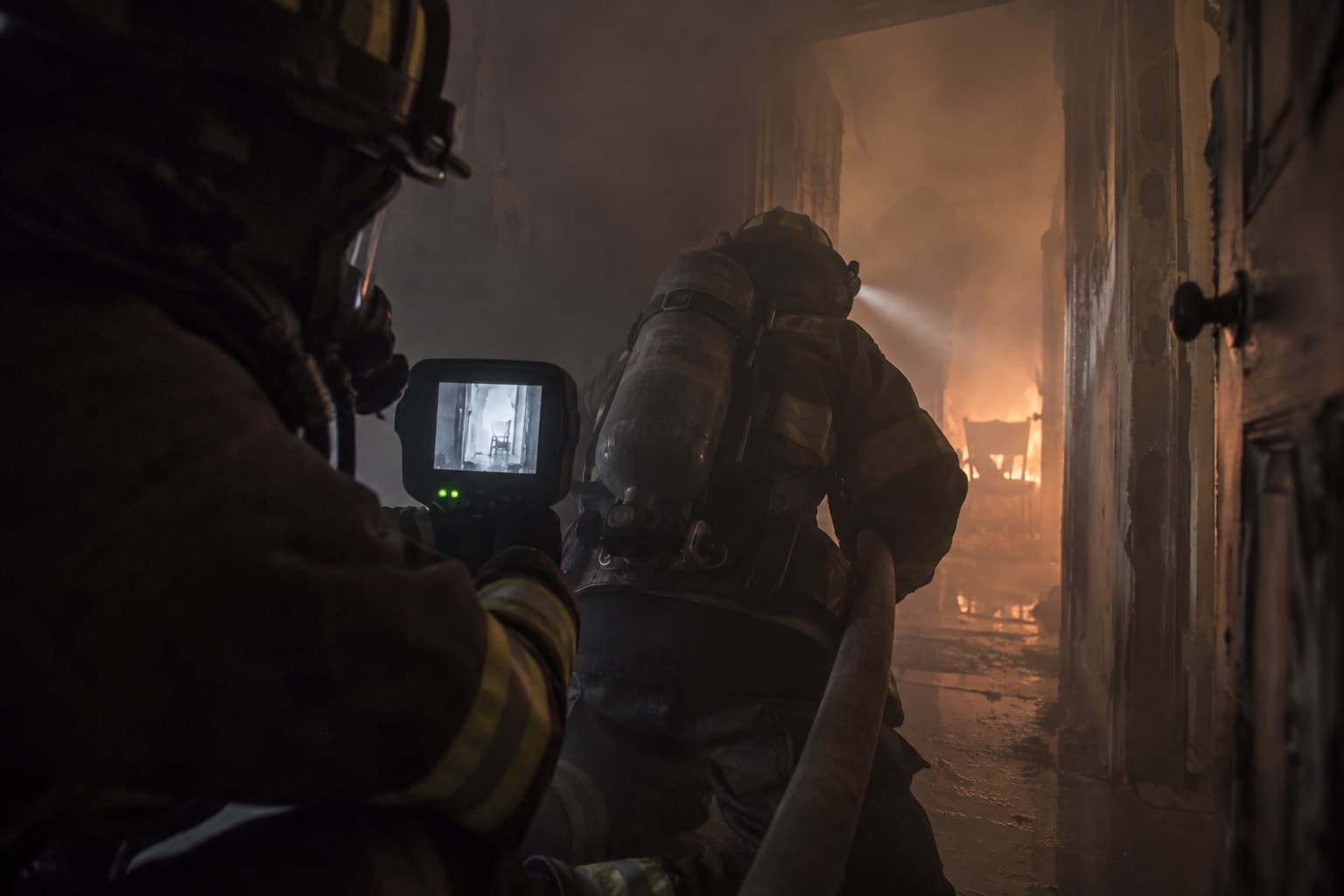
Interior view of a firefighter advancing a hoseline in heavy smoke, seen alongside the thermal image the crew is working from.

Our data sits in separate systems that cannot be looked at together

Incidents are in one system, inspections in another, EMS in a third, and the parcel and census data that would make sense of all three belongs to someone else. Every question that crosses two systems becomes a project, so most of them are never asked.

Technology approaches

Joining records across systems

Bringing incident, inspection, EMS and community data into one place that can be queried, whether that is a warehouse, a reporting layer or a set of scheduled exports.

Before you buy

  • Ask what happens when the source system changes a field. A join that breaks silently is worse than no join.
  • Ask who can see the joined result. Two datasets that are each fine to hold can be sensitive together.
  • Ask whether you can get your own data back out in a usable form.

Mapping and geospatial analysis

Putting records on a map at the address, parcel or census tract level so patterns that are invisible in a table become visible.

Before you buy

  • Ask how addresses are matched to parcels, and what the match rate is on your own data.
  • Ask whether the map can be shared without exposing the individual records behind it.