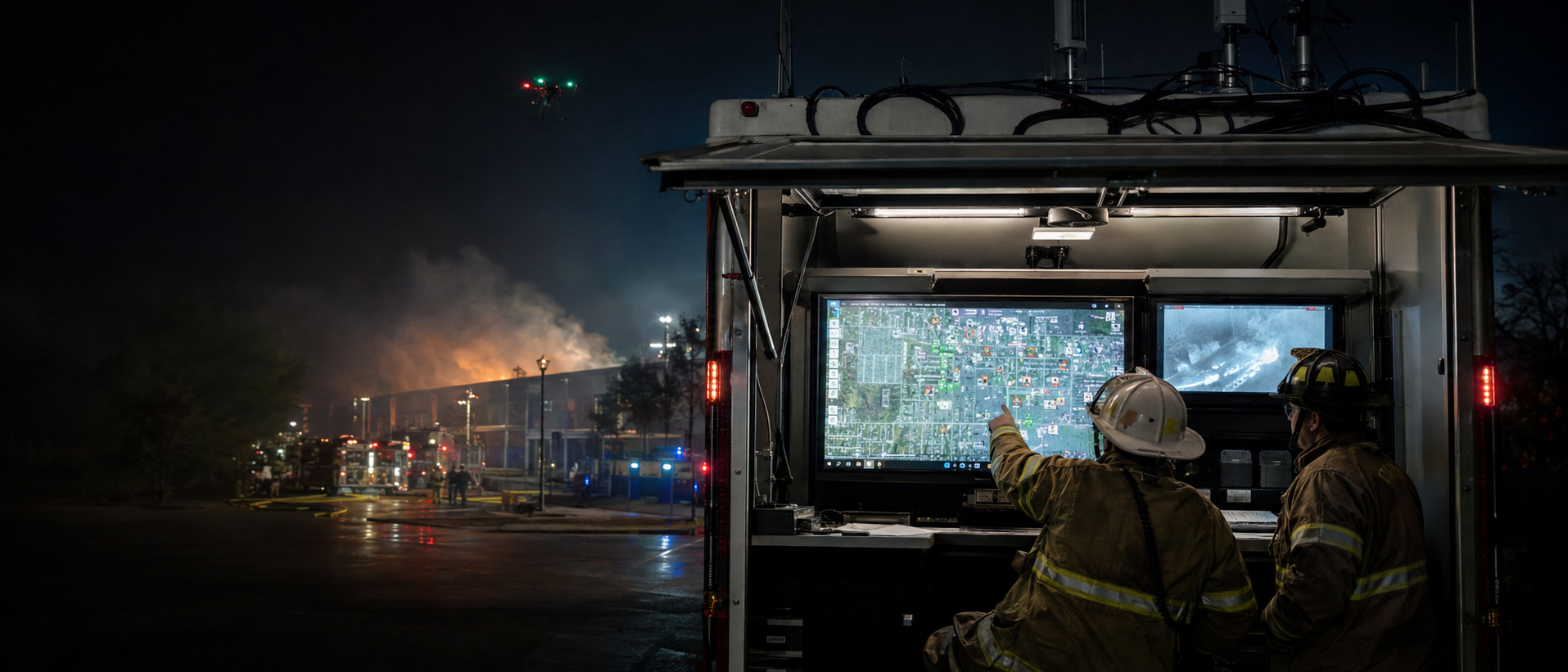
The modern fireground is producing more information than ever before: CAD data, radio traffic, accountability, SCBA status, thermal imaging, UAS video, preplans, building information, responder location, environmental sensors, and increasingly physiological information from firefighters operating inside the hazard zone.
The goal of a connected fireground is not to put all of that information on another screen. The goal is to identify what matters, bring information together, recognize meaningful changes, and help firefighters and incident commanders understand what is happening while there is still time to act.
There is enormous potential here. There is also a significant difference between technology that works during a controlled demonstration and technology that remains useful during a working fire. Systems must be evaluated under realistic conditions: heat, water, gloves, noise, poor visibility, rapidly changing assignments, limited staffing, unreliable connectivity, and high cognitive workload.
If it requires perfect connectivity, constant manual input, another person staring at a screen, or equipment that cannot tolerate heat, water, gloves, noise and chaos, it probably isn't ready for the fireground.