
Cybersecurity Basics for Fire & EMS Departments
What you are actually exposed to, what your vendors are responsible for, and the handful of controls worth arguing for first.
Read
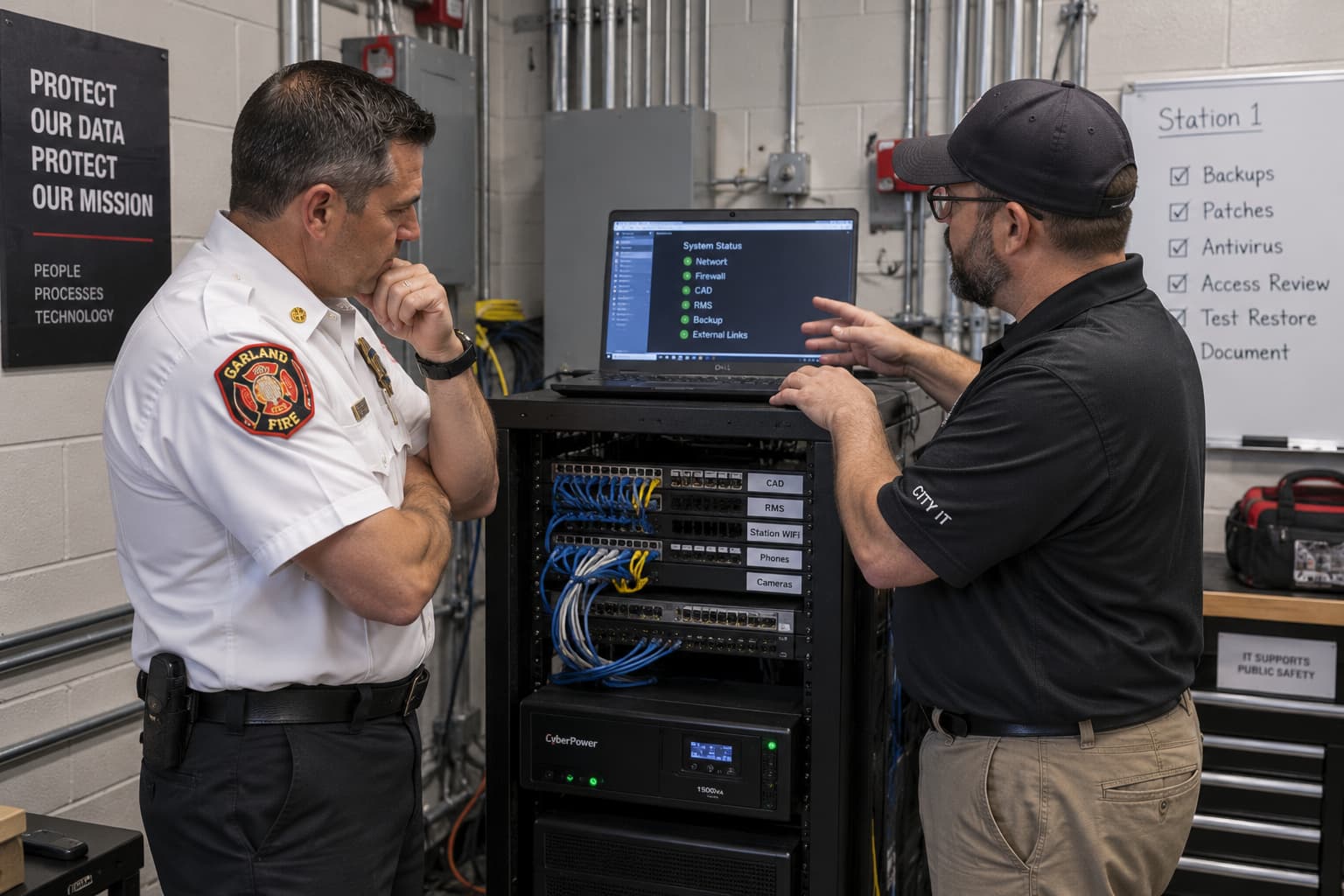
Cybersecurity is operational readiness
Cybersecurity is operational readiness. A department that cannot dispatch, alert its stations, write a patient care report or reach its records is out of service, whatever the cause. This track is written for chiefs and officers rather than for IT staff: what systems you actually depend on, who can get into them, what your vendors can reach, whether your backups restore, how you keep running without the system, and what you do in the first hours when something goes down.
What you are actually exposed to, what your vendors are responsible for, and the handful of controls worth arguing for first.
Identify the systems whose loss, compromise or manipulation could disrupt emergency operations.
Why compromised credentials remain one of the simplest paths into an organization, and how access should change when employees, vendors or roles change.
Your cybersecurity exposure includes companies that host your data, connect to your systems, maintain your equipment and provide cloud services.
A backup only matters if it can actually be restored. Departments also need a plan for continuing operations when critical technology is unavailable.
Every connected device creates capability and potential exposure. Understand the security considerations surrounding tablets, phones, sensors, wearables and other connected responder technology.
What the first hours look like when CAD, records or email are gone, who decides what comes back first, and how a department keeps answering calls while it happens.
Pieces with a reading list point at the clearest outside treatment of the subject we could find and verify. If something here is wrong, missing, or in the wrong order for how a department actually works, that is worth knowing now.
Send a note