
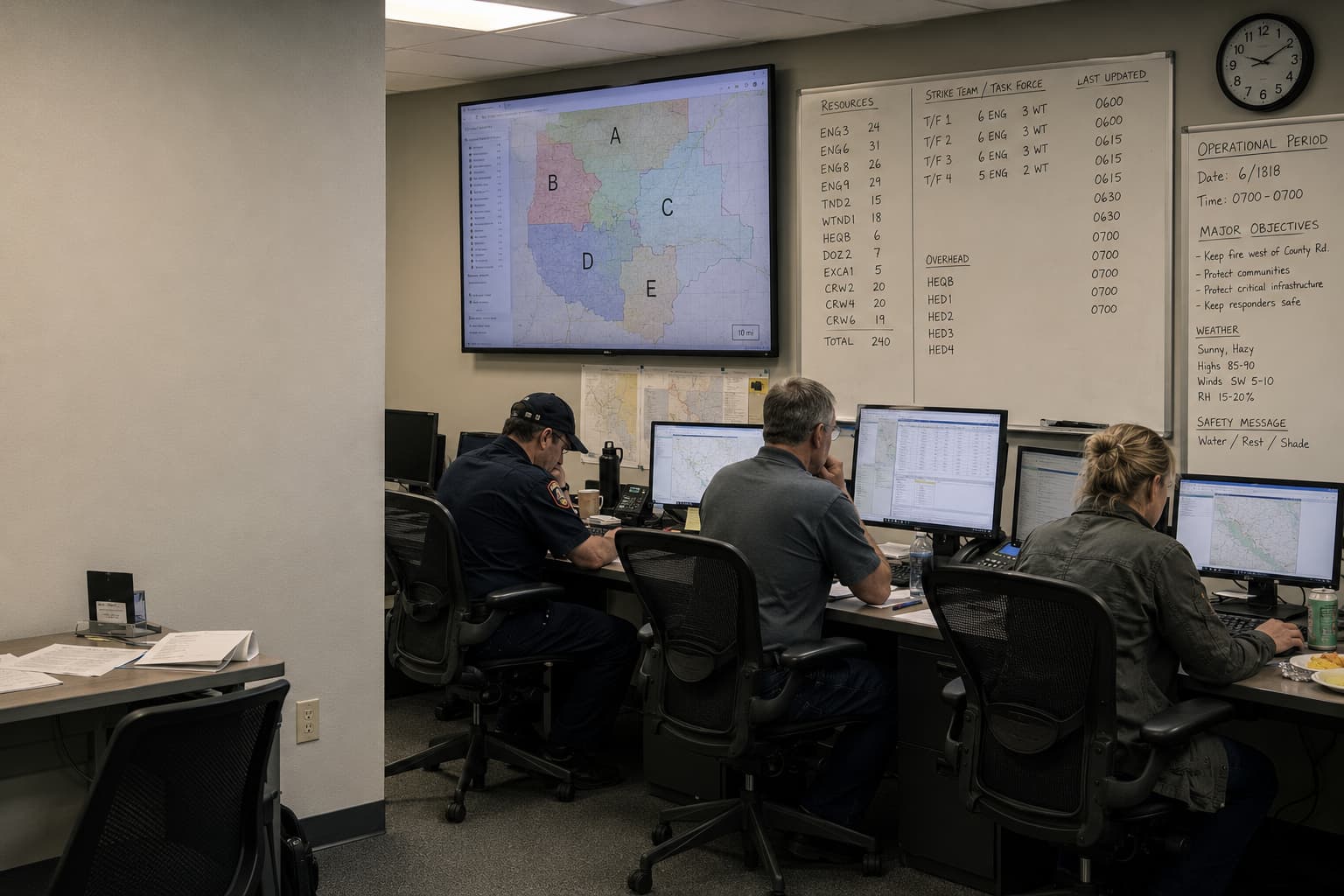
Emergency Management
The emergency is not only what is happening. It is everything the incident is disrupting.
An incident that runs for days is a different problem from one that runs for hours. Emergency management technology is mostly about holding a shared picture across agencies that do not share systems, tracking requests and resources at a scale no whiteboard holds, and producing the record that pays for the recovery afterwards. It also has to keep working when the building it normally runs from has been evacuated.
A fire is managed in hours. A disaster may have to be managed for days, weeks, months or years — and somewhere in that stretch the problem stops being the hazard and becomes everything the hazard has broken.
As an incident grows, the work changes shape. It becomes coordination between agencies that do not share systems, information that has to mean the same thing in two rooms, prioritization when everything is urgent, logistics, resource management, public communication, keeping the organization itself running, money, and eventually recovery.
This is a field guide to that work, and to where technology helps with it. It is written from the fire service's point of view, on the understanding that emergency management is never one agency's job.
Where to start
Emergency Management covers more ground than one page can hold. Each part below stands on its own - read the one that answers your question, in whatever order suits you.