
Cyber Incident Response: When Systems Go Down
What the first hours look like when CAD, records or email are gone, who decides what comes back first, and how a department keeps answering calls while it happens.
Read
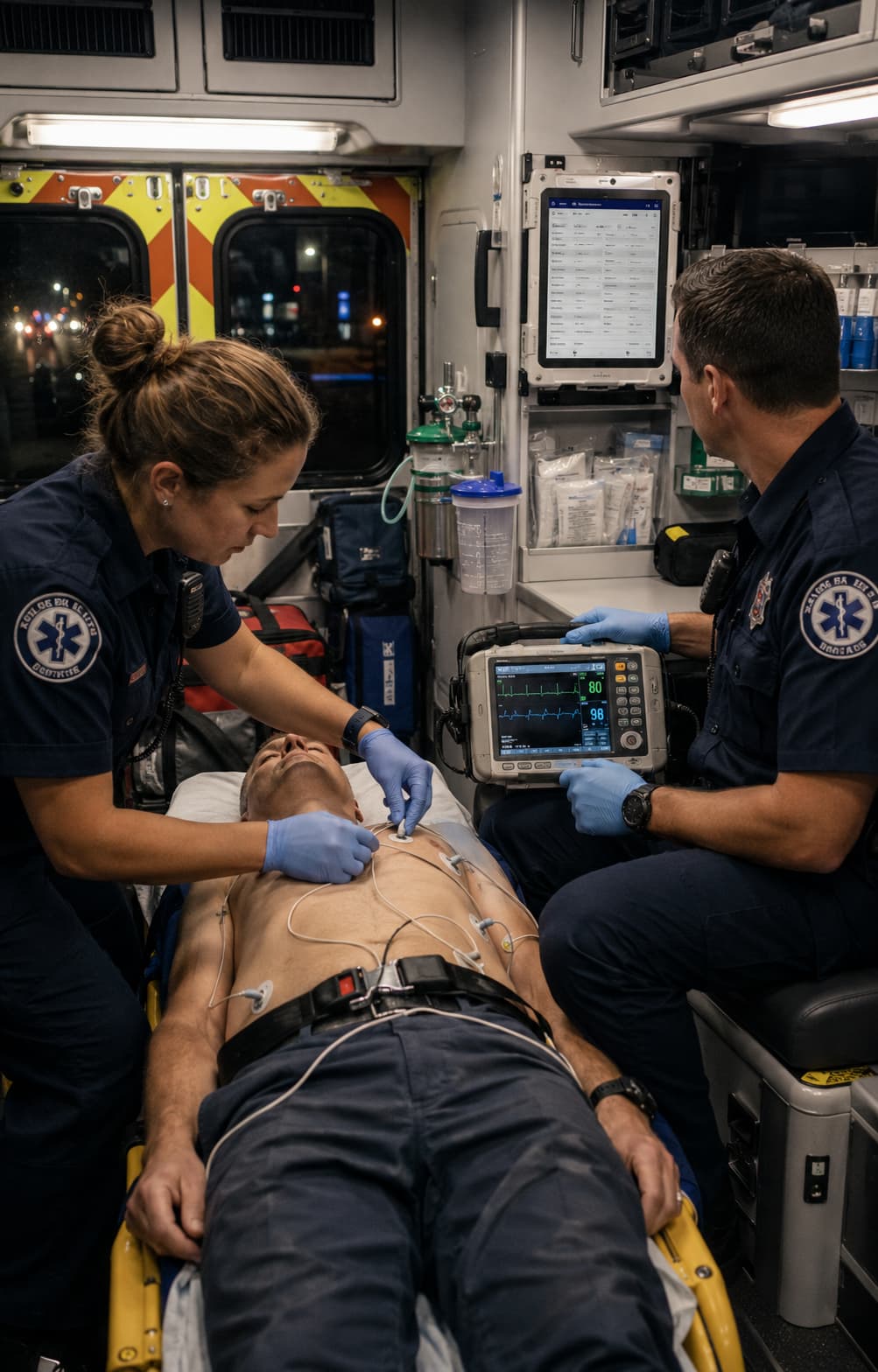
EMS technology sits at the intersection of emergency response, clinical care and healthcare information systems. ePCR, cardiac monitors, CAD, NEMSIS, hospital EHRs and outcome data all capture different parts of the patient encounter. The persistent challenge is getting useful information to follow the patient without forcing clinicians to document the same information repeatedly.
Receiving clinicians may depend primarily on a verbal handoff while the complete EMS patient-care record is still being finished, transmitted or manually entered into another system.
Vital signs, ECG information, medications, procedures and timestamps may exist in a cardiac monitor, CAD or another system but still require manual re-entry into the ePCR.
EMS agencies can document assessment and treatment in detail while receiving little or no information about diagnosis, intervention, disposition or patient outcome. That limits meaningful clinical quality improvement.
Government, standards and peer-reviewed sources on this problem. Every address here was checked before it was published.
Related guide on the Hub.
Related guide on the Hub.
Related guide on the Hub.
Nothing here is paid placement. Links are chosen because they are the clearest explanation we could find, and labeled so you know who wrote them.